Ayurvedic Perspective and Management of Shingles (Herpes Zoster) in an Elderly Patient with Dorsal Lesions: A Case Report
Clinical Case Study
DOI:
https://doi.org/10.64280/JAA.2025.V1I1014Keywords:
Herpes Zoster, Visarpa, Tridosha, Raktashodhana (blood purification), Jatyadi TailaAbstract
Background:
Herpes zoster, also known as shingles, is caused by reactivation of the varicella-zoster virus (VZV) and presents as painful, vesicular eruptions along dermatomes, primarily affecting the elderly. In Ayurveda, it is comparable to Visarpa (a rapidly spreading skin disorder), a Tridoshaja (involving all three doshas) condition affecting Twak (skin), Rakta (blood), Mamsa (muscle tissue), Lasika (lymph), and Sweda (sweat). This case report explores an Ayurvedic approach to herpes zoster using classical formulations.
Patient Information:
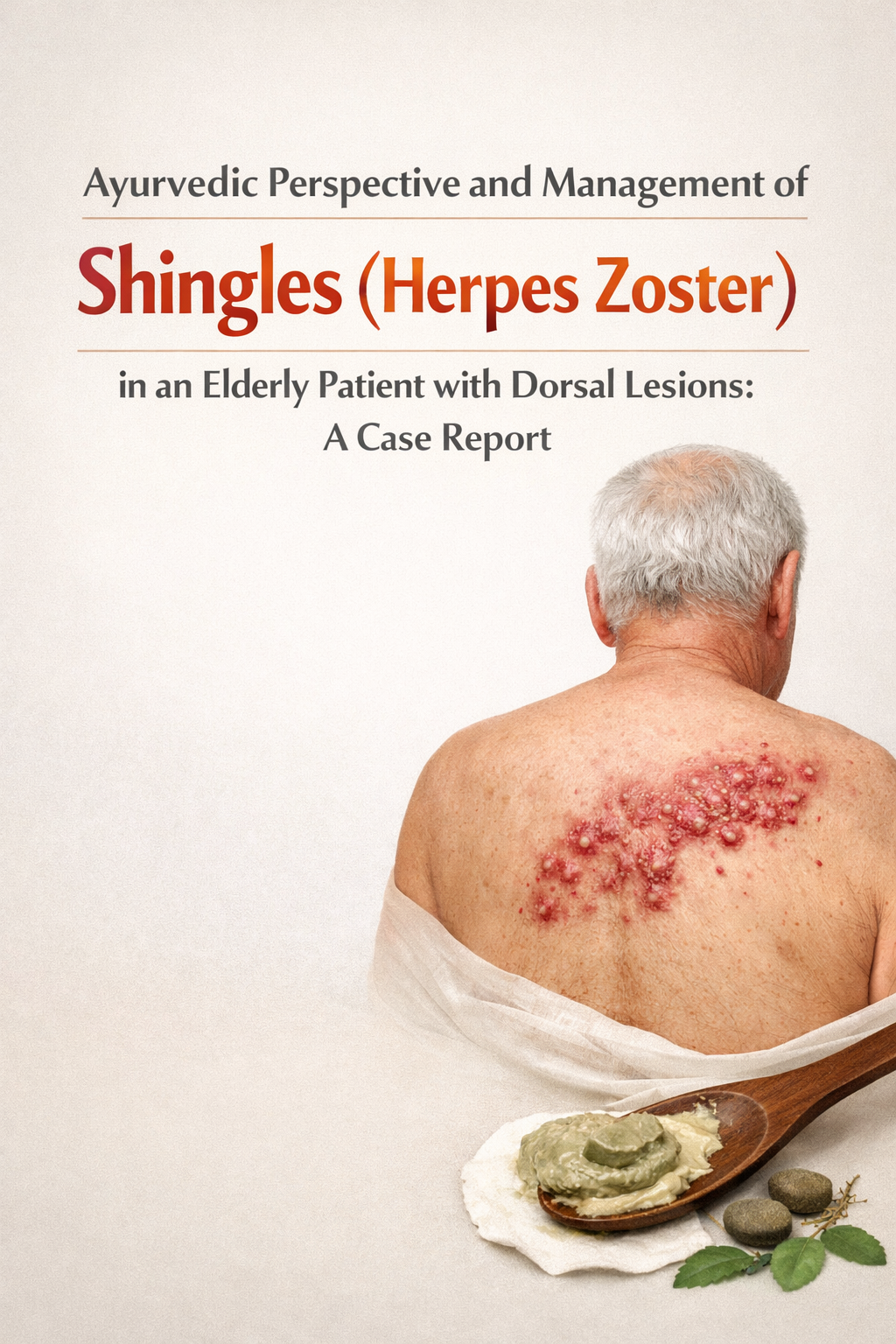
A 60-year-old female presented with painful vesicular eruptions, burning sensation, and discharge on the right posterolateral back for one month. She had previously been treated with antivirals (Acyclovir, Famciclovir) with minimal relief.
Intervention:
A Shamana (palliative) line of treatment was undertaken. The patient was administered Arogyavardhini Vati (an herbal tablet for detoxification and liver function) 500 mg TDS, Panchnimba Churna (five-herb neem-based powder) 3 g BD, and Jatyadi Taila (wound-healing herbal oil) applied locally for 21–30 days. Dietary and lifestyle modifications (Pathya-Apathya) were also advised.
Results:
Within two weeks, significant symptomatic relief was noted. Vesicles healed, pain and discharge subsided, and no new eruptions appeared. No postherpetic neuralgia or scarring was observed during follow-up.
Conclusion:
This case demonstrates effective management of herpes zoster through Ayurvedic interventions focused on Pitta-Rakta Shamana (balancing the pitta dosha and purifying the blood) and Vrana Ropana (wound healing). The selected drugs facilitated rapid healing and prevented complications. Larger-scale clinical trials are warranted to establish the efficacy of Ayurvedic protocols in viral dermatoses.
Downloads
Published
Issue
Section
License
Copyright (c) 2025 The Author(s)

This work is licensed under a Creative Commons Attribution-NonCommercial-ShareAlike 4.0 International License.